
 Nestlé Health Science - Go to Homepage
Intended only for
U.S. Healthcare Professionals
- Discover Nestlé Health Science
- The Role of Nutrition
- Therapeutic Areas
-
Educational Resources
Educational Resources
Enhance your expertise and help support your patients with our comprehensive educational resources.
For HCP’s
-
Our Products
Our Products
Explore Nestlé Health Science’s diverse range of nutritional products.
Discover All Products - Request Samples



























Weight Management
Obesity and overweight remain among the most pressing public health challenges in the United States. By 2030, obesity could affect more than half of the US population.1 This chronic, multifactorial disease is a major driver of comorbidities such as type 2 diabetes, cardiovascular disease, and liver disorders.2
Weight management is a multifaceted approach to improving overall health and reducing the risk of chronic diseases. It encompasses more than just losing weight; it involves maintaining a healthy body composition, metabolic balance, and physical functionality. Key components - such as high-protein diets, micronutrient supplementation, proper hydration, and strength training are key to preserving muscle and mitigating deficiencies, especially when using GLP-1 therapies like semaglutide.
Nestlé Health Science is committed to advancing evidence-based nutritional solutions that complement medical therapies and empower healthcare professionals to deliver comprehensive weight management strategies.
About Weight Management
Weight management is not simply about reducing body weight. Effective weight management involves maintaining a healthy body composition, metabolic stability, and functional capacity, and is important for improving overall health, reducing the risk of chronic conditions,2 and mitigating risks associated with:
- Type 2 Diabetes (T2DM): Improved weight control enhances insulin sensitivity and glycemic outcomes.3
- Liver Health: Weight stabilization can reduce hepatic fat accumulation and progression of NAFLD/NASH.4
- Cardiometabolic Health: Sustained weight management supports blood pressure control, lipid balance, and cardiovascular risk reduction.2
Even modest, sustained weight reduction of 5-15% can lead to clinically meaningful improvements in these areas.
Nutrition & Weight Management
Nutrition is one of the most important components of effective weight management. Beyond calorie restriction, modern approaches emphasize sustainable practices that preserve lean mass, support metabolic health, and reduce the risk of nutrient deficiencies. These strategies aim to balance energy intake with nutrient density, ensuring long-term success rather than short-term results.5
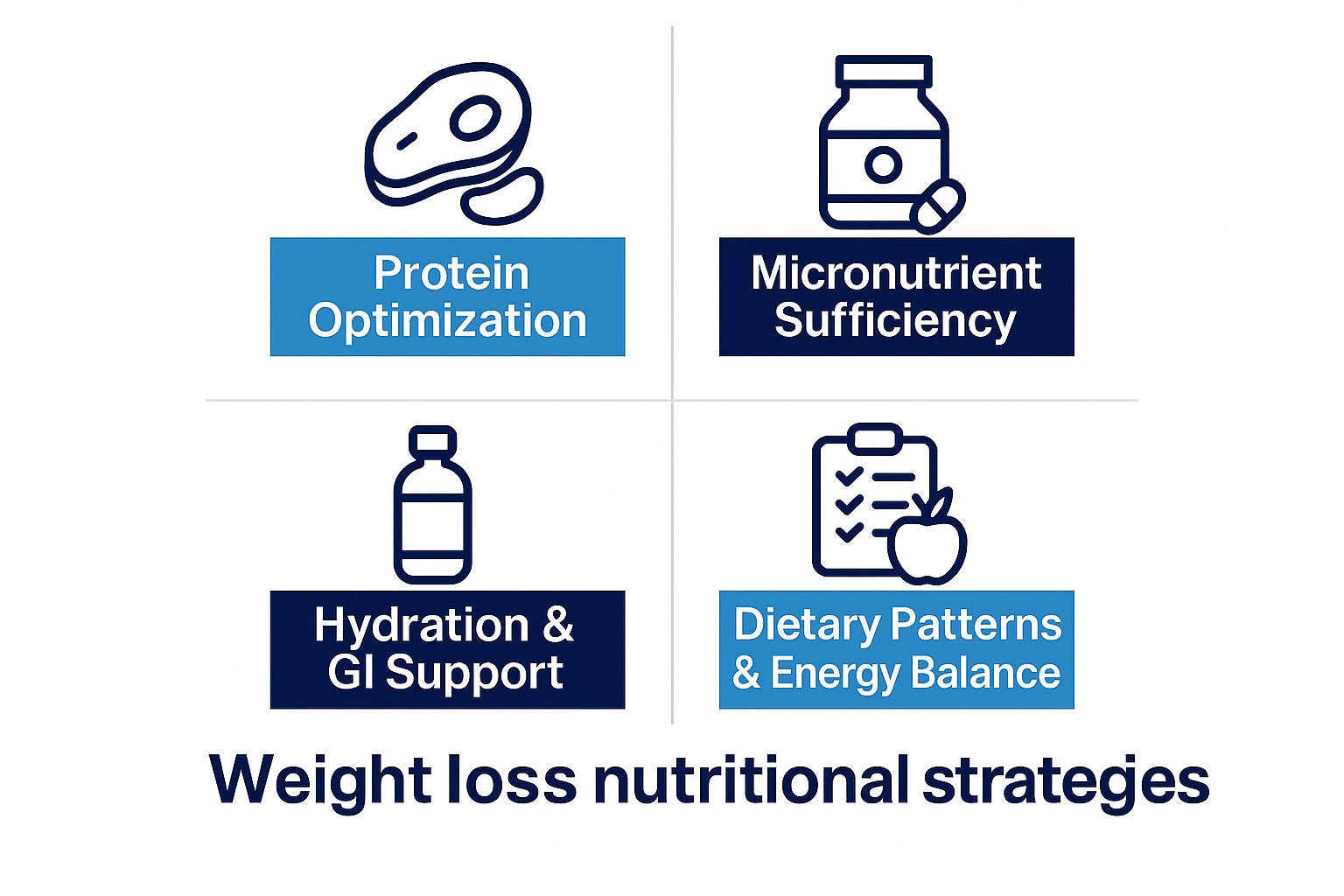
Core Nutritional Strategies
- Protein Optimization for Lean Mass Preservation: Preserving skeletal muscle mass during weight reduction is critical for maintaining metabolic rate and functional capacity.6 The current recommended protein intake for a patient on obesity medication is 1-1.5 g of protein per kg of body weight daily, with the higher end of this range (1.2-1.5 g/kg/day) recommended for older individuals (>65 years) and those with multiple comorbidities.11 Distribute protein evenly across meals, (about 25-30 g per meal), ideally including ~5 g leucine per meal to enhance muscle protein synthesis. 6,12 High-quality protein sources such as whey, lean meats, legumes, and dairy are preferred.6
- Micronutrient Sufficiency and Supplementation: Individuals with obesity often present with suboptimal levels of vitamin D, B6, C, E, magnesium, selenium, and zinc. These deficiencies may be exacerbated by calorie restriction or pharmacotherapy (e.g., GLP-1 receptor agonists). Supplementation or nutrient-dense dietary planning is recommended to mitigate risks of sarcopenia and metabolic dysregulation.5
- Hydration & Gastrointestinal Support: Adequate hydration (≥at least 2L/day) is essential, particularly in patients experiencing early satiety or GI symptoms. Fiber intake should be optimized to support digestive health and nutrient absorption.5
- Dietary Patterns and Energy Balance: Scientific consensus favors low-calorie diets (LCDs) ranging from 800–1500 kcal/day for short-term weight loss, with emphasis on nutrient-dense foods to promote satiety and preserve lean mass.5 High-protein diets (25-30% of daily energy) enhance thermogenesis and appetite regulation.6 Emerging evidence supports plant-based diets, intermittent fasting, and meal timing strategies for metabolic flexibility and improved adherence.10
GLP-1 Therapies and Nutritional Considerations
GLP-1 medications, such as semaglutide and tirzepatide, have demonstrated significant weight loss outcomes. However, they also present unique nutritional challenges, including inadequate intake of protein, fiber, and micronutrients, loss of lean muscle mass, and digestive change.8,9
To address these challenges, clinical guidance recommends:
- Protein-rich diets to counteract muscle catabolism.6
- Fiber rich diets to support gastrointestinal health.6
- Resistance training to preserve strength and functional capacity.7
- Micronutrient monitoring to prevent deficiencies resulting from reduced intake.5
To support individuals during their weight management journey - including those on GLP-1 medications—Nestlé Health Science products complement their routine when managing body composition, gut health, micronutrient intake, and overall weight becomes a priority.
Support Resources
You must be logged in to view all resources.
17 Evidence Found


References
- Ward ZJ, et al. N Engl J Med. 2019;381:2440–2450.
- Mechanick JI, et al. Endocr Pract. 2020;26:1196–1225.
- American Diabetes Association. Diabetes Care. 2024;47(Suppl 1):S1–S154.
- Chalasani N, et al. Hepatology. 2018;67:328–357.
- ASPEN Clinical Guidelines: Nutrition in Obesity Management. 2023.
- Rogeri PS, et al. Nutrients. 2021;14(1):52.
- Villareal DT, et al. N Engl J Med. 2011;364:1218–1229.
- Wilding JPH, et al. N Engl J Med. 2021;384:989–1002.
- Davies M, et al. Lancet Diabetes Endocrinol. 2021;9:563–574.
- Patterson RE, et al. Annu Rev Nutr. 2017;37:371–393.
- Fitch A, et al. Obes Pillars. 2025;16:100205.
- Sundaresh S, et al. Cleve Clin J Med. 2025;92(11):686–692.