





















FOR YOUR GI IMPAIRED PATIENTS
whey better
nutrition starts with

Mechanically ventilated enterally fed patients who receive Peptamen® formulas
have significantly lower prevalence of GI and glucose intolerance,
as compared to those who receive standard formulas
& other peptide-based formulas
Mechanically ventilated enterally fed patients who receive Peptamen® formulas have significantly lower prevalence of GI and glucose intolerance, as compared to those who receive standard formulas & other peptide-based formulas

Abstract Study Summary
Clinical Benefits Associated with Use of Peptide-Based Enteral Tube Feeding Formulas in Mechanically Ventilated Adult ICU Patients
Cynthia Lowen, RD, CNSC; Laura Schott, PhD; Amarsinh Desai, PhD, MS, B. Pharm, D.Pharm; Isabel Gomez, BA; Zhun Cao, PhD; Krysmaru Araujo Torres, MD
Journal of Parenteral and Enteral Nutrition 2023;47(Supp 2):S92-S93.
Background
More than 5 million patients are admitted to US intensive care units (ICUs) yearly, with approximately 38.9% requiring mechanical ventilation (MV). Critical Care Guidelines suggest enteral tube feeding (ETF) if duration of MV > 72 hours. Many of these patients experience gastrointestinal (GI) and/or glucose intolerance, associated with decreased ETF delivery and worsened clinical outcomes. Nutritionally complete hydrolyzed 100% whey protein ETF (WPBD) was developed for more efficient digestibility.
Objective
The primary objective of this retrospective, cross-sectional real-world observational analysis was to compare characteristics and associations of ETF with clinical outcomes of GI and glucose intolerance in adult MV patients in the ICU receiving WPBD, other peptide-based formulas (OPBD) or intact standard ETF (SETF).
Methods
Data of adult critically ill mechanically ventilated patients who received ETF at least 3 of 5 consecutive days was collected through PINC® AI Healthcare Data for the period of 2017-2021. Patient characteristics and clinical outcomes were compared between those who received WPBD (Peptamen® formulas), OPBD or SETF.
Results
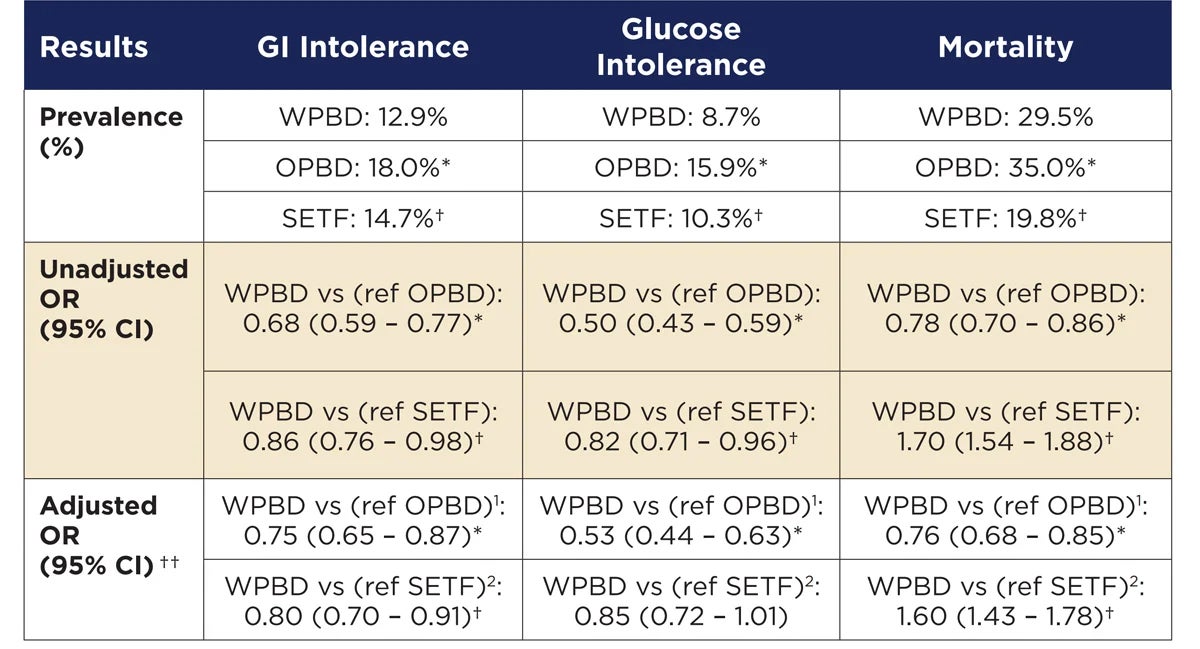
There were 12,887 patients from 53 US hospitals included in this study (3,004 WPBD, 3514 OPBD and 6369 SETF). Patients received ETF for a mean of 8.3 days and stayed in the ICU for a mean of 14.7 days. Comparing WPBD to OPBD: odds of GI intolerance was 25% lower, glucose intolerance 47% lower and mortality 24% lower for WPBD recipients (each p < .0001). Comparing WPBD to SETF, odds of GI intolerance were 20% lower (p=.001) and glucose intolerance 15% lower (p=.06) in the WPBD group.
Table 1: Clinical Outcomes Among Medically Ventilated Adult ICU Patients Receiving ETF Formulas
Abbreviations:
Enteral Tube Feeding (ETF); 100% whey, peptide-based (WPBD); other peptide-based diets (OPBD); intact-protein standard ETF formulas (SETF); gastrointestinal (GI); odds ratio (OR); confidence interval (CI)
*WPBD vs OPBD, p<.05; †WPBD vs SETF, p<.05
††Adjusted for demographics, medications, hospital and clinical characteristics
1 Adjusted OR from regressions including all 3 ETF cohorts in which OPBD is used as the reference group
2 Adjusted OR from regressions including all 3 ETF cohorts in which SETF is used as the reference group
Conclusions
■ Better GI tolerance and glycemic control were associated with WPBD relative to OPBD and SETF usage in ICU patients on MV
■ Use of 100% whey peptide-based formulas is a strategy to help minimize GI and glucose intolerance and may clinically benefit patients mechanically ventilated in the ICU, helping to facilitate adequate and optimal delivery of ETF

As compared to the use of standard formulas, mechanically ventilated patients who receive Peptamen® formulas experience significantly better outcomes:

odds of GI intolerance
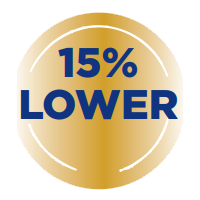
odds of GLUCOSE intolerance
As compared to the use of other peptide-based formulas, mechanically ventilated patients who receive Peptamen® formulas experience significantly better outcomes:
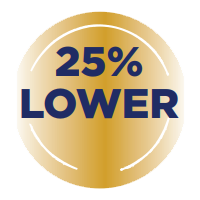
odds of GI intolerance
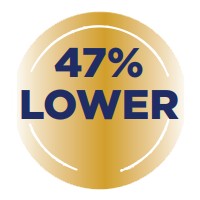
odds of GLUCOSE intolerance

odds of MORTALITY
To request samples and find out more information contact your Nestlé Health Science representative, call 1-800-422-ASK2 (2752), or visit www.NestleMedicalHub.com/brands/peptamen.
Helpful Links:
Download the PDF version of this Peptamen Power Pack
Journal Link to Abstract S92-S93: https://aspenjournals.onlinelibrary.wiley.com/doi/epdf/10.1002/jpen.2491
Study summary prepared by Nestlé Health Science. Download PDF of Summary
The poster presented at ASPEN 2023 may be accessed online: ASPEN Poster P19
All trademarks are owned by Société des Produits Nestlé S.A., Vevey, Switzerland.
©2024 Nestlé. All rights reserved.