


























Compleat® Pediatric Peptide 1.5 and Compleat® Peptide 1.5 made with real fruit and vegetable ingredients are associated with reductions in GI intolerance symptoms, reductions in healthcare resource utilization and cost savings
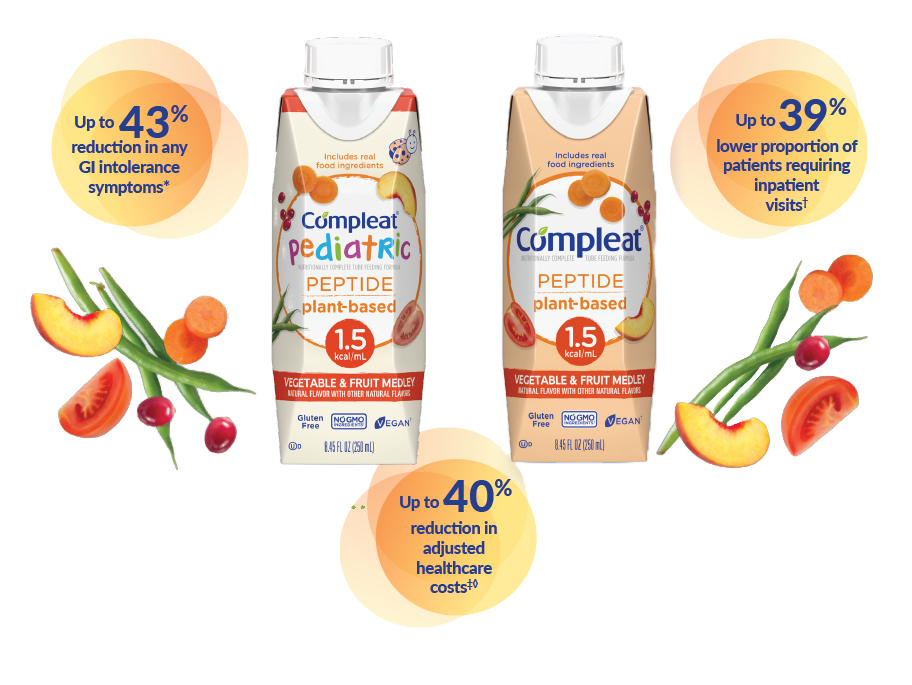
A retrospective, observational study of 91 children and 82 adults in the post-acute care setting associates these unique plant-based formulas with reduced GI intolerance symptoms, reduced healthcare resource utilization and cost savings up to 6 months post-hospital discharge compared to the 6 months prior to hospital discharge.
Results statistically significant (p≤0.05) unless otherwise noted with p-value. 6-month post-discharge vs prior 6-month period:
*children, 43% reduction; adults, 42% reduction †children, 39% lower; adults, 29% lower ‡children, 27% reduction (p=0.0515); adults 40% reduction ◊adjusted for age, gender, and comorbidity index score
Reductions in Gastrointestinal Intolerance, Healthcare Resource Utilization and Cost Associated with a Plant Based Peptide Enteral Formula with Fruit and Vegetable Ingredients: Retrospective Analysis of Children and Adults in Post Acute Care
A Research Summary based on Minor, G et al. Nutrition and Dietary Supplements. 2025;17:63-72. │ Published on May 29, 2025
Why Was This Study Done?
Peptide-based enteral nutrition (EN) formulas have demonstrated benefits on gastrointestinal (GI) intolerance symptoms and reduced healthcare resource utilization (HCRU) in acute and post-acute care settings. There is also a growing interest in EN formulas with real fruit and vegetable ingredients for improved GI tolerance and health economic related outcomes. However, there is a paucity of research on peptide-based EN formulas that also include fruit and vegetable ingredients.
This study examined clinical outcomes (i.e., GI intolerance symptoms), HCRU and costs associated with a plant-based peptide EN formula containing fruit and vegetable ingredients.
How Was This Study Performed?
Children (age 1–13 years) and adults (age ≥ 14 years) prescribed a plant-based peptide EN formula with fruit and vegetable ingredients (Compleat® Pediatric Peptide 1.5, Compleat® Peptide 1.5, Nestlé HealthCare Nutrition, US, respectively) in a post-acute care setting, with a history of formula use for at least 5 days, were included in analysis. GI intolerance symptoms, HCRU and costs were compared 6-months pre hospital discharge and up to 6-months post-hospital discharge.
Study Design
- Retrospective
- Observational
- De-Identified US medical and pharmacy claims data
- Period between January 2020 and December 2022
Patients
Study Results
A plant-based peptide EN formula with fruit and vegetable ingredients was associated with reduction in GI intolerance symptoms, HCRU, and adjusted healthcare costs.
Outcomes
% Patients
Pre-Discharge
6-Months Post Discharge
% Patients
Pre-Discharge
6-Months Post Discharge
Mean Adjusted Costs◊
Pre-Discharge
6-Months Post Discharge
Results statistically significant (p≤0.05) unless otherwise noted with p-value. ◊adjusted for age, gender, and comorbidity index score
Limitations and Future Directions
- Observed outcomes are based on retrospective design, and the use of real-world evidence/claims data can only demonstrate association.
- Future research comparing use of plant-based peptide EN formula to other formulas is needed.
Use of a plant-based peptide EN formula with fruit and vegetable ingredients was associated with significant reductions in GI intolerance symptoms, HCRU and associated costs. These data support use as a well-tolerated option for EN in children and adults requiring EN support in a post-acute care setting.