






























Tolerance, Healthcare Utilization and Cost of Enteral Peptide-Based Diets in Children in Post-Acute Care in the USA
LaVallee C, Seelam P, Balakrishnan S, †Lowen C, †Henrikson A, †Cekola P, †Kesting B, †Araujo Torres K
Journal of Clinical Nutrition and Dietetics 2021;7(4):1-6
Background:
Disease related malnutrition is a prevalent condition in pediatric patients and negatively affects patient growth, development and clinical outcomes as well as being linked to impaired quality of life. Various medical conditions may lead to decreased nutrient intake, nutrient loss, altered nutrient utilization and increased energy expenditure. Enteral tube feeding (ETF) may be necessary to aid in meeting nutritional requirements. Peptide-based formulas consist of hydrolyzed protein and MCT and are designed for enhanced digestion and absorption for improved gastrointestinal (GI) tolerance and more adequate nutrient intake.
Objective:
Describe the demographic, clinical and treatment characteristics of 100% whey protein peptide-based (w-PB) ETF in pediatric patients (1-<18 years of age) in the post-acute care setting and assess real world tolerance and frequency of GI intolerance-related adverse events before and after initiation of w-PB ETF.
Methods:
Medical claims data from the Decision Resources Group (DRG) Real World Evidence Data Repository US database were obtained for this study. Pediatric patients (1-<18 years of age) who received w-PB ETF (Peptamen®Junior) enteral formulas during the period of Q1-2013 through Q4 -2017, following hospital discharge, were included. Patient data was collected for the period of up to one year after initiation of w-PB ETF formulas. Pre index period is defined as the one-year period before product was taken for the first time (index) and post index for the one year after the index date. Conditions monitored included diseases of the digestive system, endocrine nutrition and metabolic diseases, diseases of the respiratory system and diseases of the circulatory system, among others. Intolerance was defined as the presence or absence of nausea, vomiting, diarrhea, constipation, abdominal distention, and gastric residual.
Results:
A total of 911 pediatric patients were included in the study with a mean age of 6.18 years; 52.5% male. The mean Charlson comorbidity score was 2.02.
Patients receiving PBD-i were on their formula for a median of 37 weeks with a median weight gain of 2.6 kg. Those receiving PBD-t were on PBD for a median of 22 weeks and experienced median weight loss of 0.5 kg while on SPF, and median weight gain of 2.7 kg while on PBD. Patients were able to consume 94.8% of goal energy needs from PBD, as compared to 73.3% from SPD formulas. After transition to PBD, no symptoms were reported in 6 of 9 patients (66.7%).
The most common underlying medical conditions included diseases of the digestive system, diseases of the nervous system, diseases of the respiratory system, endocrine nutrition and metabolic diseases, congenital malformations/deformations, and chromosomal abnormalities.
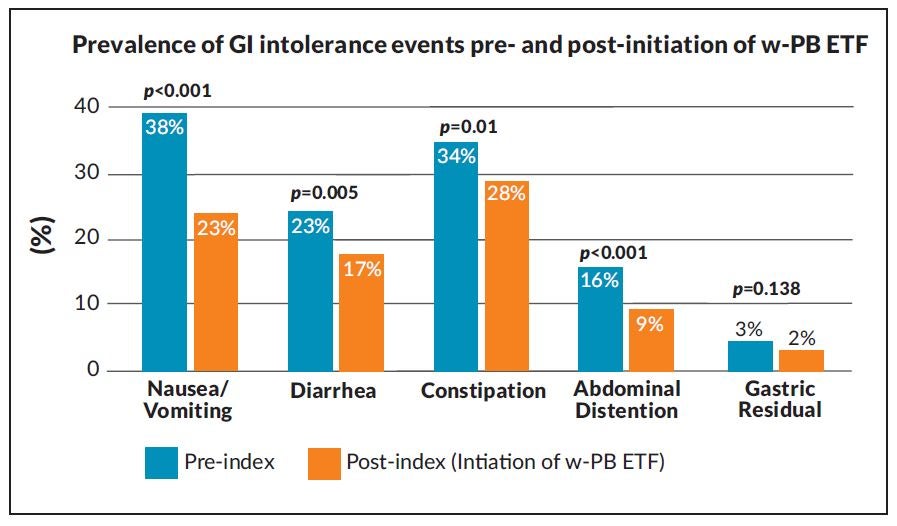
Across the study population, there was a statistically significant improvement in GI tolerance after initiation of w-PB ETF, including pre and post index changes, decrease in one or more intolerance events and decrease in healthcare utilization.
Discussion:
This data indicates that utilization of w-PB ETF in the post-acute care setting leads to a significant reduction in GI intolerance symptoms, compared to pre-index nutritional support, where standard ETF or oral nutrition was used. W-PB ETF may be used to optimize digestion and absorption in the context of managing symptoms of feeding intolerance.
Conclusion:
Use of w-PB ETF formulas is a valuable treatment option for those enterally fed pediatric patients who experience or are at high risk of GI intolerance. GI intolerance leads to frequent feeding interruptions and potential reduction in nutrient delivery, which could lead to malnutrition. Malnutrition is associated with poor clinical outcomes, increased healthcare utilization and increased mortality.
Study Summary Prepared by Nestlé Health Science. Download PDF of Summary
The complete study can be accessed at: https://clinical-nutrition.imedpub.com/tolerance-healthcare-utilization-and-cost-of-enteral-peptidebased-diets-in-children-in-postacute-care-in-the-usa.pdf
†Nestlé Health Science Employees
©2021 Nestlé Health Science. All rights reserved.