




























Use of Peptamen® Formula resulted in a decrease of $17,615 in total cost of care per patient in feeding intolerant patients who received home enteral nutrition.

In a retrospective study of 60 pediatric and adult patients in a post-acute care setting diagnosed with illnesses such as malignancy, hepato-biliary/pancreatic disorders and other GI conditions, use of Peptamen® formulas was associated with a 50.1% reduction in enteral feeding intolerance and a 45.5% decrease in cost of care.
When patients across multiple diagnoses received Peptamen® formulas, healthcare resource utilization improved at all time points up to 8 weeks as compared to the 4 weeks prior.

The Use of Peptide-Based Diet in Enteral Nutrition Therapy: A Retrospective Cost Analysis
Osman Mohamed Elfadil, MBBS, Ankitaben Patel, MBBS, Raj N. Shah, MBBS, Ryan T. Hurt, MD, PhD, Manpreet S. Mundi, MD
Journal of Parenteral and Enteral Nutrition 2023;47(S2):S18.
Background
Home enteral nutrition (HEN) is often used to provide long-term nutrition therapy. Enteral feeding intolerance (EFI) is prevalent in HEN patients and often requires transition to a peptide-based tube feeding formula (PBF).
Objective
Determine the economic impact of using specialized formulas for the treatment of EFI in the HEN population.
Methods
This was a retrospective analysis of the Mayo Clinic Rochester HEN population data, evaluating the cost of transitioning to a 100% whey PBF during therapy from October 2018 through August 2020, with evaluation of demographic data, enteral nutrition (EN) regimen and cost of care being captured through October of 2020 or termination of EN.
Cost of care was categorized as follows:
- Emergency Department visits-ED
- Inpatient care-IP
- Outpatient care-OP
- Total cost of care-TC
Results
- Indication for EN included dysphagia/odynophagia, malnutrition, nausea and vomiting, fistula or bowel perforation, inadequate oral intake or obstruction/stricture.
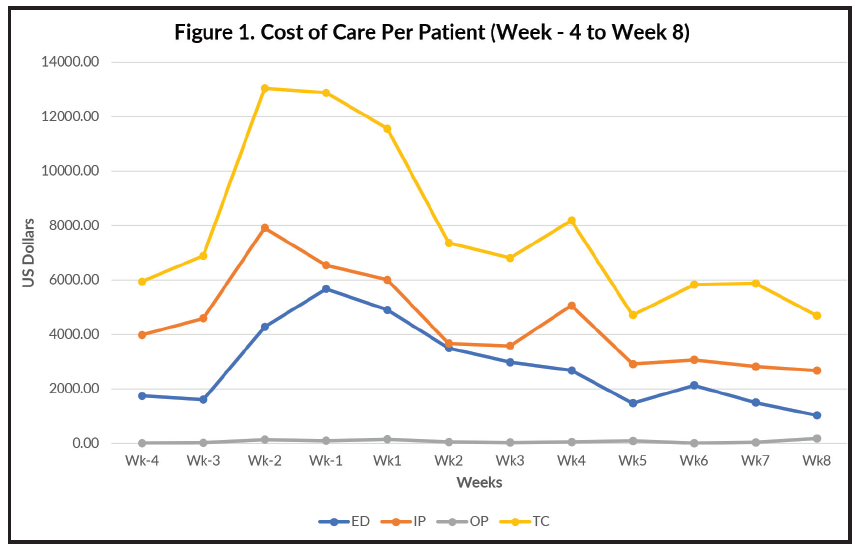
ED = Emergency Department Visits IP = In Patient OP = Out Patient TC = Total Cost of Care
Use of 100% whey PBF improves EFI and results in a reduction in overall and itemized total cost of care.