























2022 US Infant Formula Recall: The Health Economic Impact of Switching Hypoallergenic Amino Acid Formulas In Children
Desai A., Cekola P., Boccella J., et al.
JPGN 2023;77(1): A 748, S538-539
Background:
On February 17, 2022, Abbott Nutrition, initiated a voluntary recall of their powdered infant formulas, and as a consequence, the US faced prolonged formula shortages,1 including amino acid-based formulas (AAF). AAF play a significant role as sole source of complete nutrition in the dietary management of children with cow’s milk protein allergy, multiple food allergies or malabsorptive conditions. Switching formulas can cause concerns related to the potential impact on tolerance and other outcomes, and formula intolerance can lead to increased healthcare resource utilization (HCRU) and economic impact.
Objective:
This study assessed HCRU and associated costs in children that switched hypoallergenic AAF during this nationwide formula shortage.
Study design:
A retrospective study using nationally representative US claims data obtained from the Decision Resources Group Real World Evidence Data Repository (Clarivate), which covers 98% of US health plans, including medical and pharmacy claims. Patient characteristics, comorbidities, HCRU and costs of care were assessed in children ≤ 18 years; with a history of receiving EleCare® or EleCare® Jr formulas (AAAF, Abbott Nutrition, US) and having switched to Alfamino® Infant or Alfamino® Junior formulas (NAAF, Nestlé HealthCare Nutrition, US); in postacute care settings between June 2021 and April 2023.
Methods:
The index date was defined as the date when patients switched from AAAF to NAAF. Outcomes were measured at 1-, 3- and 6-months post-switch time periods. HCRU and associated costs with emergency department (ED), inpatient, outpatient, urgent care (UC), telemedicine and other visits were captured. Results were presented as mean (SD) or N (%). Outcomes at pre-switch and post-switch periods were compared using Chi-square or t-tests.
Results:
402 children (40% female; mean [standard deviation (SD)] age 5.3 [4.7] years) from all US regions, switched from AAAF to NAAF. The most common comorbidities pre-switch were GI conditions (51%), congenital conditions (49%) and developmental delays (27%). Among 355 patients (88%) with ≥1 comorbidity, the mean (SD) pediatric comorbidity index (PCI) score was 4.8 (3.4).
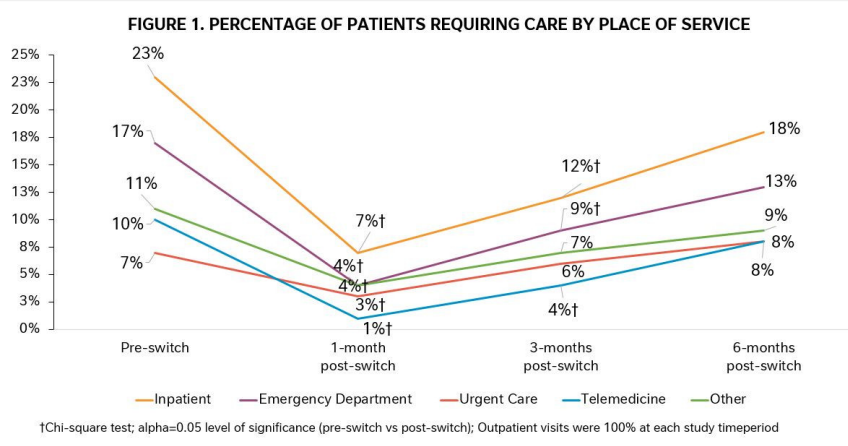
All children recorded outpatient visits at all study time-periods, although significantly fewer patients required ED, inpatient, UC, telemedicine, or other services at 1-month post-switch compared with pre-switch (p<0.05). Figure 1
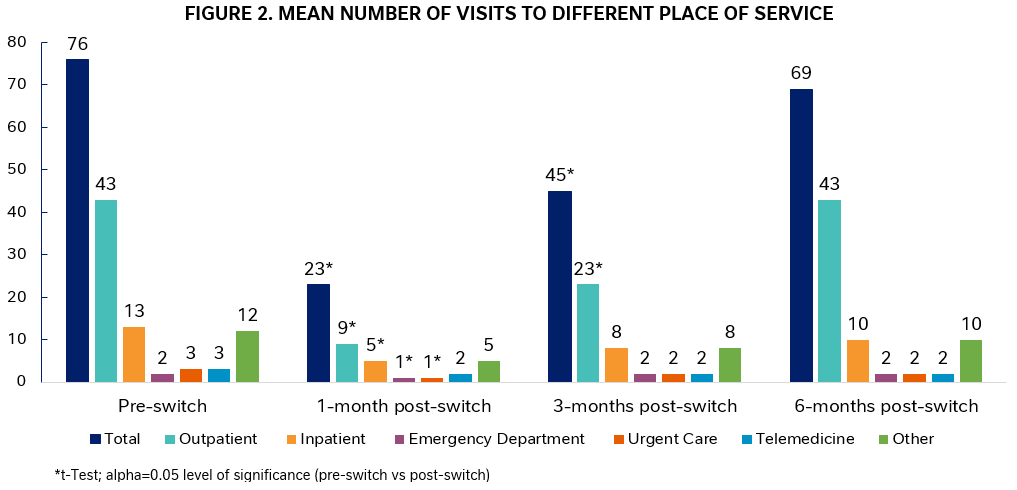
Mean total visits (76 vs 23, p<0.001), outpatient(43 vs 9, p< 0.001, inpatient (13 vs 5, p=0.04), ED (2 vs 1, p< 0.001) and UC ( vs 1, p=0.014) visits per patient were significantly lower at 1-month post-switch. Significant reductions in mean total number of visits were also observed at 3-months post-switch (76 vs 45, p< 0.001). Figure 2
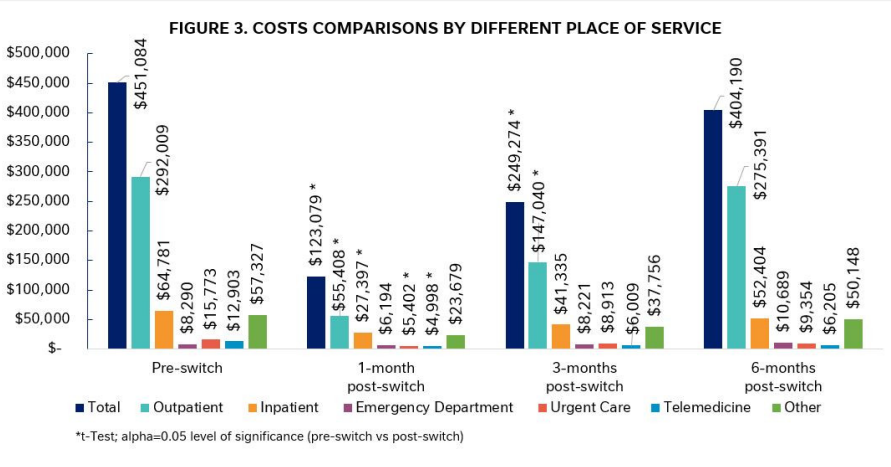
Decreased HCRU resulted in significant (p< 0.05) reductions in total costs associated with post-acute care visits up to 3-months post-switch (Figure 2). There was no significant difference in visits and associated costs at 6-months post-switch. Figure 3
Conclusion:
This study found that children in post-acute care settings successfully transitioned from AAAF (Elecare® ) to NAAF (Alfamino®) Infant or Juinor products with significantly fewer reported allergy symptoms and experienced any GI intolerance symptoms, including abdominal distention, constipation, diarrhea, flatulence, and nausea & vomiting up to 6 months post-formula switch.
- During the 2022 infant formula shortage, children who switched to NAAF had a safe and effective transition.
- Significant reductions on HCRU and associated costs up to 3 months were observed after switch NAAF from AAAF.
References:
(1) The White House. 2022. FACT SHEET: President Biden Announces Additional Steps to Address Infant Formula Shortage. May 12, 2022; <https://www.whitehouse.gov/briefing-room/statements-releases/2022/05/12/fact-sheet-president-biden-announces-additional-steps-to-address-infant-formula-shortage;
(2) Cekola P et al. (2023) NASPGHAN. Oct 4-7;77(1), S552
Study summary prepared by Nestlé Healthcare Nutrition. Download PDF of Summary
The poster presented at NASPGHAN 2023 may be accessed online: NASPGHAN Abstract 748
The complete abstract may be accessed online: NASPGHAN 2023.pdf (lww.com)
EleCare is a registered trademark of Abbott Laboratories. Unless otherwise indicated, all trademarks are owned by Société des Produits Nestlé S.A., Vevey, Switzerland. ©2024 Nestlé. All rights reserved. Bridgewater, NJ 08807 U.S.A.