

























Metabolic Stabilization & Weight Recovery with Peptamen Junior® HP in Pediatric Patients with Traumatic Brain Injury (TBI)
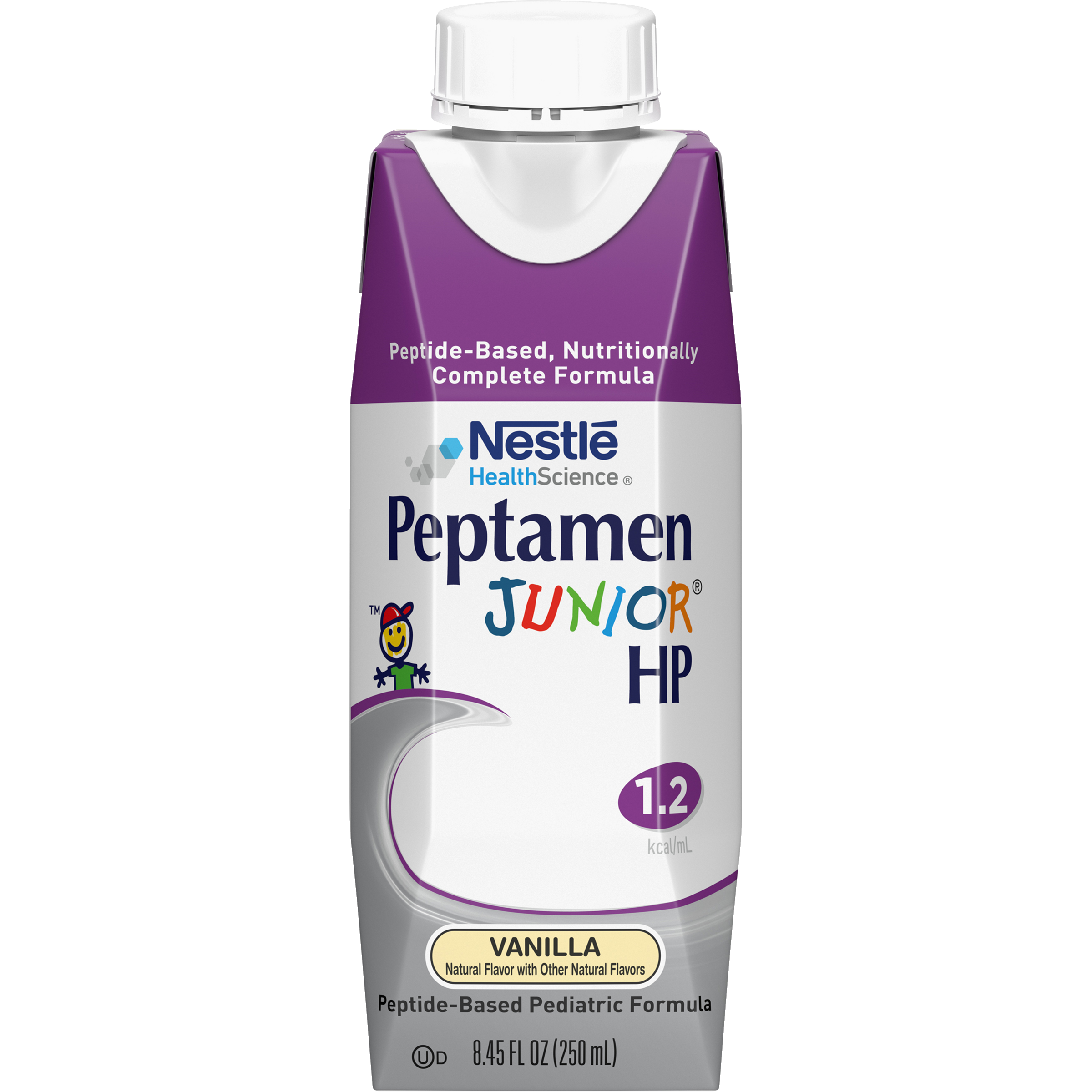
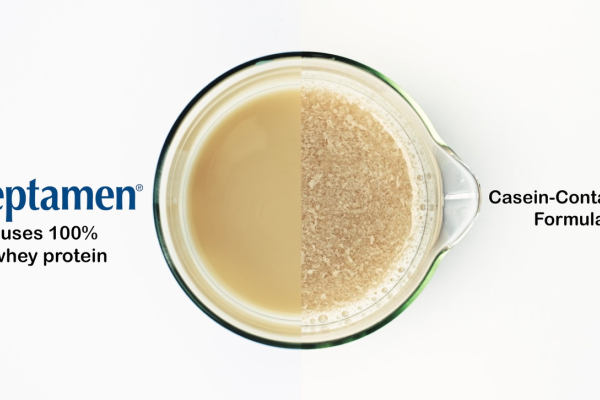
A case study of a 9-year-old patient with severe TBI in the PICU demonstrates that early initiation of Peptamen Junior® HP — a high-protein, peptide-based formula containing 100% whey protein and 60% MCT — supported metabolic stabilization, mitigated lean body mass loss, and contributed to partial weight recovery. The patient was discharged from the PICU without a diagnosis of malnutrition.
High-Protein Enteral Nutrition in a Pediatric Patient with Severe Traumatic Brain Injury
Boukas K, Nguyen JN, Caminos C, Nawaratne U. J Parenter Enteral Nutr. 2026; 50(S1): S226–S227.
Introduction
Nutritional support is critical in the management of critically ill children, particularly those at high risk of malnutrition due to hypermetabolic and catabolic states.1,2 Traumatically injured children often face profound metabolic disturbances and increased energy needs that are difficult to meet early in the hospitalization. In the Pediatric Intensive Care Unit (PICU), early enteral nutrition has been associated with improved clinical outcomes and enhanced recovery.3
Background
A 9-year-old boy was admitted to the PICU with multiple injuries, including a severe traumatic brain injury. Enteral nutrition (EN) was started 60 hours post-admission with a high-protein, peptide-based formula (Peptamen Junior® HP). His course included 15 days of mechanical ventilation, tracheostomy and gastrostomy tube placement on day 11, and surgical repair of other injuries. PICU length of stay (LOS) was 18 days; total hospital LOS was 46 days.
Results
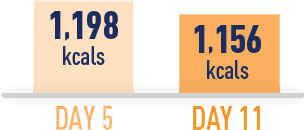

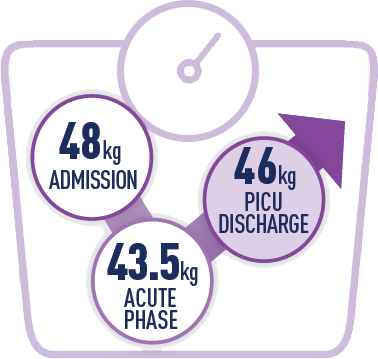
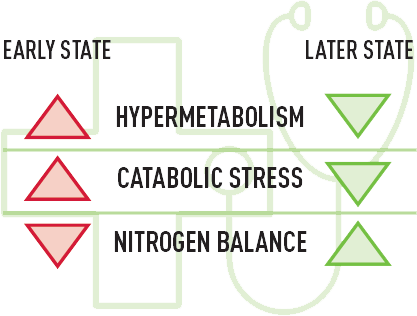
Patient left the PICU without a diagnosis of malnutrition.
Early initiation of Peptamen Junior® HP:
- Supported metabolic stabilization
- Mitigated excessive loss of lean body mass
- Contributed to partial weight recovery
Indirect calorimetry confirmed efficient nutrient utilization and appropriate caloric provision without evidence of overfeeding.
Peptamen Junior® HP was well tolerated and provided balanced macronutrient support.