






























Low Protein Intakes and Poor Diet Quality Associate with Functional Limitations in US Adults with Diabetes: a 2005-2016 NHANES Analysis
Fanelli SM, Kelly OJ, Krok-Schoen JL, Taylor CA. Nutrients 2021; 13(8): 2582
Background
Type 2 diabetes is associated with an increased risk of sarcopenia, which can lead to falls and fractures, in turn resulting in decreased quality of life and frailty.
Objective
To determine whether differences in protein intake and diet quality were associated with differing functional status in adults who had various levels of glycemic control.
Results
Inadequate protein intake.
Overall, 51.2% of those with diabetes, 45.4% with pre-diabetes, and 34.2% of those without diabetes did not meet minimum protein recommendations.
Low protein intake: diety quality.
Compared to adults who met the minimum protein recommendation, those consuming <0.8g/kg/d had higher carbohydrate intake and lower diet quality across all glycemic groups (p<0.001).
Low protein intake: physical limitations.
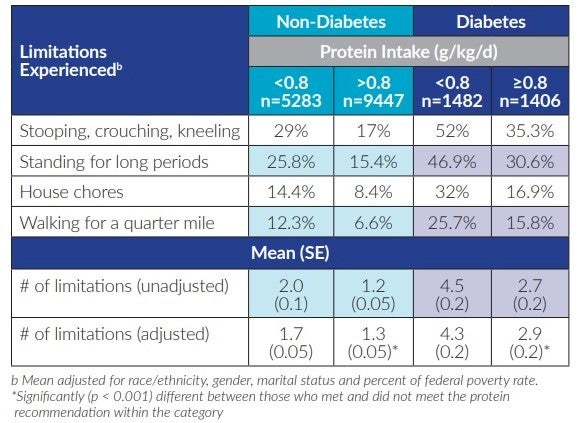
Across all glycemic groups, those not meeting protein recommendations reported a significantly greater number of physical limitations (p<0.001).
Diabetes or pre-diabetes: physical limitations.
Adults with diabetes and pre-diabetes had a greater frequency of physical limitations than those without diabetes, regardless of protein intake category.
Diabetes + low protein intake: physical limitations.
Adults with diabetes consuming <0.8 g/kg/d had a significantly higher mean number of functional limitations. More than half (52%) reported limitations in kneeling, crouching, and stooping. Select other outcomes shown in table.
Conclusions
More than half of those with diabetes consumed less than the minimum protein recommendation of 0.8 g/kg/ day, and inadequate protein intake was associated with a greater number of physical limitations in daily activities.
Findings support previous studies demonstrating that adults with diabetes are at increased risk for muscle loss and functional decline. Therefore, adequate protein intake is an important component of a healthy diet and is critically important for maintaining muscle function in people with type 2 diabetes.
This study also reinforces the importance of Medical Nutrition Therapy (MNT) as a frontline strategy in diabetes care to provide meal planning guidance which includes understanding the importance of adequate protein consumption in addition to monitoring carbohydrate intake.
Summary prepared by Nestlé Health Science. Download PDF of Summary
The complete study may be accessed online: Low Protein Intakes and Poor Diet Quality Associate with Functional Limitations in US Adults with Diabetes: A 2005–2016 NHANES Analysis - PMC (nih.gov)
All trademarks are owned by Société des Produits Nestlé S.A., Vevey, Switzerland
©2022 Nestlé Health Science. All rights reserved.
NEST-15245-1122