



























Peptide-based formula was well-tolerated as either an initial formula or as a transition feeding in children who required long-term home enteral nutrition
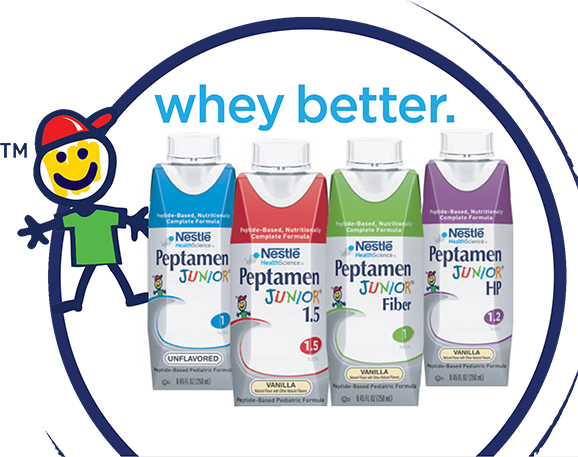
In children intolerant of standard polymeric formula, transition to peptide-based formula (Peptamen Junior®) was associated with significant reductions in provider visits, phone calls and emergency department visits.

Transition to Peptide Based Formula is Associated with Greater Tolerability and Reduction in Healthcare Utilization in Children Receiving Enteral Nutrition
Elfadil OM, Steien D, Narasimhan R, Epp L, Velapati S, Patel I, Patel J, Hurt R, Mundi M.
Journal of Parenteral and Enteral Nutrition 2022; 46(3): 626-634. DOI:10.1002/jpen.2202.
Introduction
Prevalence of home enteral nutrition (HEN) has increased significantly over the past few decades. Enteral feeding intolerance (EFI) is a frequent cause of suboptimal nutrition in children on HEN and is defined as the presence of gastrointestinal (GI) distress, significant gastric residual volume and suboptimal delivery of enteral nutrition (EN).
Objective
The purpose of this study was to assess changes in GI tolerance and healthcare utilization in children receiving peptide-based HEN (PBD).
Methods
This was a retrospective review of the electronic medical records of children <18 years of age and receiving at least 80% of nutrition needs from EN between October 2015 and October 2019.
Results
Patients receiving PBD-i were on their formula for a median of 37 weeks with a median weight gain of 2.6 kg. Those receiving PBD-t were on PBD for a median of 22 weeks and experienced median weight loss of 0.5 kg while on SPF, and median weight gain of 2.7 kg while on PBD. Patients were able to consume 94.8% of goal energy needs from PBD, as compared to 73.3% from SPF formulas. After transition to PBD, no symptoms were reported in 6 of 9 patients (66.7%).
In children who required long-term HEN, PBD was well-tolerated as either an initial HEN formula or as a transition feeding. In SPF-intolerant children, transition to PBD resulted in significant improvement in HEN tolerance and a reduction in healthcare utilization.